Item 01
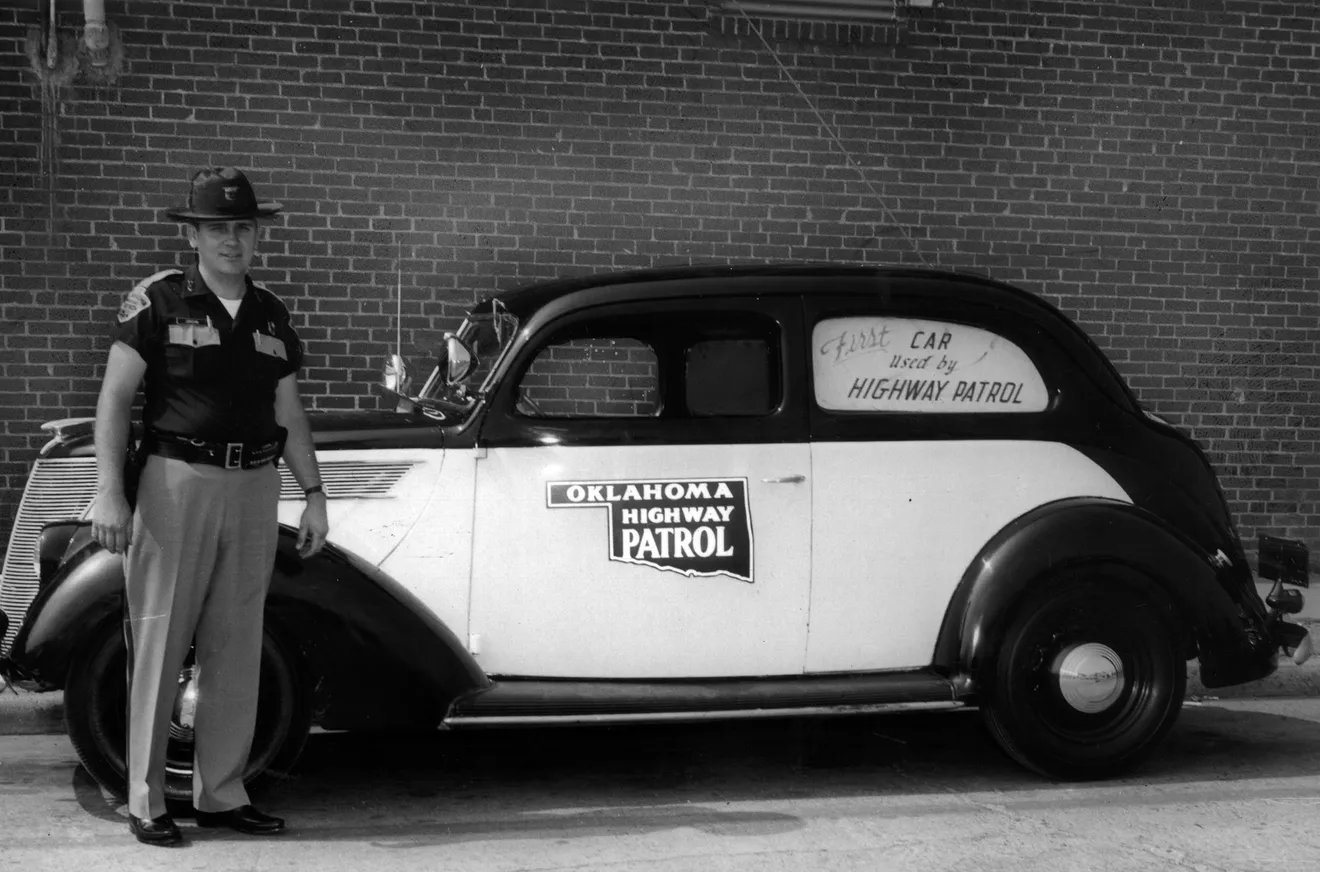
1937 Ford V-8 Sedan
Vehicle No. 14 · Restored 2018
One of the original fourteen unmarked sedans issued at the Patrol's founding. Unrestored interior; Oklahoma plate "OHP-14" in original paint.
From the 1937 Ford Model A to the modern interceptor, eight restored Patrol vehicles trace the evolution of the cruiser, the radio, and the road itself — a rolling archive of how the Patrol learned to keep up with Oklahoma's highways.
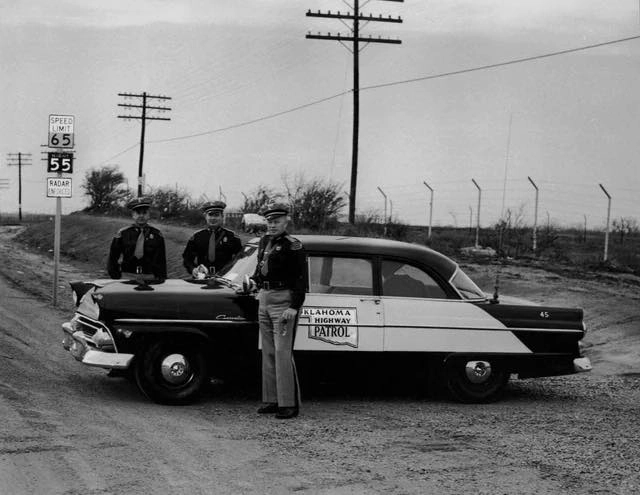
When the Patrol took to the road in 1937, troopers shared a fleet of fourteen Ford V-8 sedans — black, unmarked, and barely identifiable from the cars they pulled over. The cruiser as a public symbol — the silhouette, the lightbar, the door shield — was something the Patrol had to invent.
This gallery walks you through that invention. Each restored vehicle is paired with the year's standard-issue equipment: the radio that lived under the dashboard, the citation book on the passenger seat, the trooper's service revolver in the holster. Together they tell a story of widening responsibility — from a fourteen-man road force to a 24-hour, statewide service.
One of the original fourteen unmarked sedans issued at the Patrol's founding. Unrestored interior; Oklahoma plate "OHP-14" in original paint.
Standard-issue Patrol motorcycle, ridden by Trooper R.B. Hall on the Turner Turnpike from 1953 until his retirement in 1967.
The Patrol's first purpose-built pursuit cruiser. Donated by Tulsa County in 2009; restored over four years by volunteers.
The original red dome light, mounted on every Patrol cruiser from 1948 through 1971. Fully working; visitors may activate it.
A complete shift's worth of carbon-paper citations, recovered intact from the glovebox of a retired cruiser.
A modern interceptor in full Patrol livery, with all communication and pursuit equipment intact. Visitors may sit in the driver's seat.
The cruisers gallery occupies the original Marland carriage house, restored in 2024 to accommodate full-size vehicles. Wheelchair accessible from the south courtyard.